FMCSA requires six different kinds of drug and alcohol tests across a driver’s career, and knowing which one is triggered when is how a carrier stays compliant. DOT drug testing isn’t a single event — it’s a framework of six distinct scenarios spelled out in 49 CFR Part 382, each conducted under the collection and laboratory procedures in 49 CFR Part 40. Miss the trigger for any one of them and you’ve got a compliance gap, whether you run one truck or twenty.
This guide walks the six types of DOT drug tests in plain English: what each one is, and exactly when it’s triggered. It does not re-explain how the Clearinghouse or a consortium works — for that, see our consortium guide. Here, the focus is the tests themselves.
General information, not legal advice. Rules, rates, and criteria change. Confirm the specifics with FMCSA and your C-TPA before you rely on anything here. Fleetive is software that tracks your testing records — it is not a C/TPA and does not administer tests.
How DOT drug testing works (the framework)
Before the six types, the ground rules. DOT drug and alcohol testing applies to anyone performing a safety-sensitive function — primarily driving a commercial motor vehicle that requires a CDL. The program lives in Part 382; the actual collection, chain of custody, and lab analysis follow Part 40.
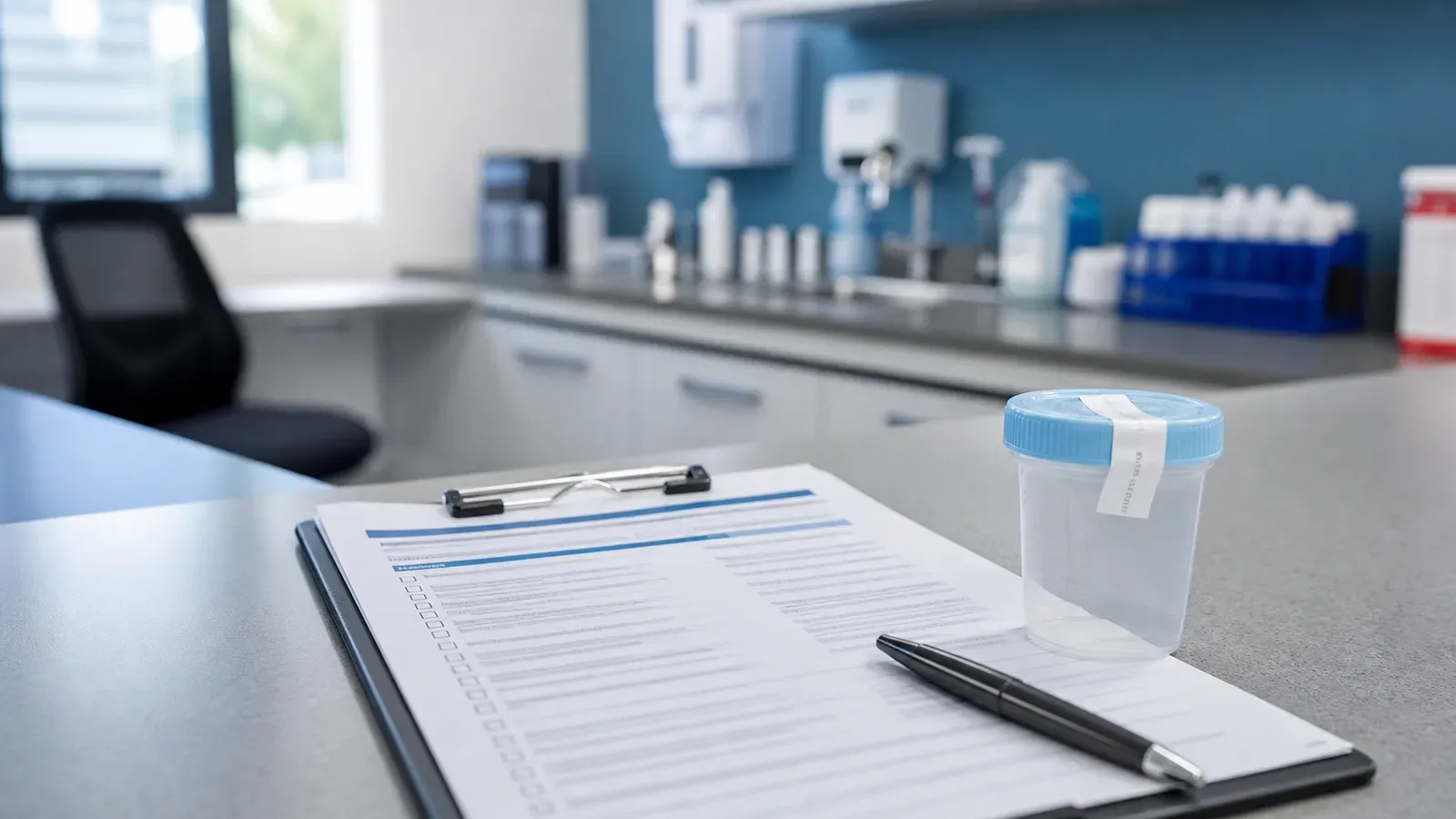
A DOT drug test is typically a 5-panel urine test processed by a certified laboratory and reviewed by a Medical Review Officer (MRO). It is a federal panel and is separate from the medical urinalysis done at a DOT physical. A confirmed positive, a refusal to test, or certain alcohol results count as violations that get reported into the FMCSA Clearinghouse — which is why a single mishandled test can follow a driver for years.
With that framing, here are the six.
1. Pre-employment drug test
When it’s triggered: before a driver first performs any safety-sensitive function for you.
A driver must have a verified negative drug test result on file before they get behind the wheel for your operation. This is the gate at the front door — no negative result, no driving. It’s a drug test specifically; pre-employment alcohol testing is generally optional under Part 382 and subject to conditions, so confirm your own policy and the current rule.
For a new hire this slots in alongside the rest of the driver qualification file and the Clearinghouse pre-employment query. For a solo owner-operator, you run this on yourself before your first load. Either way, the verified negative has to exist before the safety-sensitive work starts, not after.
2. Random drug and alcohol testing
When it’s triggered: unpredictably, throughout the year, by selection from a pool.
Random drug testing is the backbone of the program and the one people understand the least. Drivers are selected unannounced from a testing pool, and a selected driver must report for the test immediately. The selections have to be genuinely random and spread across the year — which is exactly why a one-truck operation can’t self-administer it and enrolls in a consortium/C-TPA instead.
FMCSA sets minimum annual random testing rates as a percentage of average driver positions: a higher rate for drugs and a lower rate for alcohol. Here’s the important part — these rates are set annually by FMCSA and can change from year to year. Don’t memorize a number you read online; verify the current rate for the year directly from FMCSA or your C-TPA. The mechanics of selection, and how solo operators satisfy this through a pool, are covered in the consortium guide.
3. Post-accident drug test
When it’s triggered: by specific accident criteria defined in Part 382.
A post-accident drug test is one of the most misunderstood, because not every accident triggers one. FMCSA ties the requirement to specific criteria — generally things like:
- the accident involved a fatality; or
- the driver received a citation for a moving violation arising from the accident and there was either an injury requiring medical treatment away from the scene or a vehicle that had to be towed from the scene.
Those are the general contours, but the exact criteria and the time windows for completing the alcohol and drug tests are spelled out in the regulation and are easy to get wrong under pressure. Treat the bullets above as a sketch, not a checklist — verify the precise post-accident criteria and deadlines with FMCSA (Part 382) and document why a test was or wasn’t required after any crash. Getting this decision right in the chaos right after an accident is one of the harder real-world judgment calls in the whole program.
4. Reasonable suspicion testing
When it’s triggered: by a trained supervisor’s direct observation.
A reasonable suspicion test is ordered when a trained supervisor observes specific, articulable indicators that a driver may be under the influence — things tied to appearance, behavior, speech, or body odor. It is not a hunch, a rumor, or a gut feeling.
Two guardrails matter here. First, the supervisor making the call must have completed the required training to recognize the signs of drug and alcohol use. Second, the basis for the decision should be documented — observed indicators, time, and circumstances. Without trained-observer status and a contemporaneous record, a reasonable-suspicion test can fall apart. This is one place small carriers quietly fall short, because they never get a supervisor formally trained.
5. Return-to-duty test
When it’s triggered: after a violation, before a driver returns to safety-sensitive work.
Once a driver has a drug or alcohol violation, they are prohibited from performing safety-sensitive functions until they complete the return-to-duty (RTD) process. That process runs through a Substance Abuse Professional (SAP): the driver must be evaluated by the SAP, complete the education or treatment the SAP prescribes, and then pass a return-to-duty test with a verified negative result.
The RTD test is directly observed and cannot happen until the SAP has signed off. There’s no shortcut and no skipping the SAP step — the violation stays active in the Clearinghouse until the full return-to-duty path is completed and recorded. For most small carriers this is rare, but when it happens the sequence has to be followed exactly.
6. Follow-up testing
When it’s triggered: by the SAP’s directed schedule after a driver returns to duty.
Follow-up testing is the tail end of the return-to-duty path and the one carriers forget about. After a driver passes their RTD test and resumes driving, the SAP directs a tailored, unannounced follow-up testing schedule — a minimum number of tests over a set period, on dates only the employer knows in advance, separate from and in addition to random testing.
The schedule is individualized by the SAP; it isn’t a fixed number you can guess. The employer is responsible for carrying it out on time for the full duration the SAP specifies, which can stretch over a long period. Drop one of these follow-up tests and you’ve broken the program for that driver — which is precisely the kind of date that slips when nobody is tracking it.
The hard part isn’t the tests — it’s the recordkeeping
Read back through those six and notice the pattern: the tests themselves are administered by labs and your C-TPA. What lands on you, the carrier, is knowing which test is triggered, getting it done in the window, and keeping the paperwork. That’s the part that quietly fails.
For a small carrier with no compliance department, the risk isn’t running a test wrong — your collection site handles Part 40. The risk is forgetting: the random selection notice that sits unread, the annual Clearinghouse query that lapses, the follow-up test the SAP ordered eight months ago, the verified-negative result you can’t produce when an auditor asks. Every one of those is a date or a document, and dates and documents are exactly what slip through the cracks when one person is driving, dispatching, and invoicing.
That’s the gap Fleetive’s compliance & safety tools are built to close. Fleetive keeps your testing records, consortium enrollment, and Clearinghouse query deadlines organized in one place and watches the dates — so a random selection or an annual query doesn’t turn into a violation because it got buried. Tie it to your driver records and the whole drug-and-alcohol picture stays audit-ready without a spreadsheet you have to babysit. (Fleetive tracks and reminds; it does not administer tests or act as your C-TPA — for how solo operators actually enroll in a pool, see the consortium guide.)
If you’re standing up a program from scratch, start with the broader DOT compliance basics and layer the six tests on top.
Frequently asked questions
What are the six types of DOT drug tests? Under 49 CFR Part 382, the six DOT drug and alcohol test types are pre-employment, random, post-accident, reasonable suspicion, return-to-duty, and follow-up. Each is triggered by a different situation in a driver’s career, and all are conducted under the Part 40 procedures.
When is a post-accident drug test required? FMCSA sets specific criteria — generally tied to a fatality, or to the driver receiving a citation combined with an injury that needs medical treatment away from the scene or a vehicle that has to be towed. There are also time windows for completing the test. The exact criteria and deadlines are detailed in Part 382, so verify the current rule with FMCSA before relying on a summary.
What percentage of drivers get randomly drug tested? FMCSA sets minimum annual random testing rates as a percentage of average driver positions — a higher rate for drugs and a lower one for alcohol. The rates are set annually and can change, so always verify the current FMCSA random testing rate for the year rather than assuming a fixed number.
What does a DOT drug test screen for? A DOT drug test is typically a 5-panel urine test collected and processed under 49 CFR Part 40. It is a federal panel, distinct from the medical urinalysis done at a DOT physical. Confirmed positives and refusals become violations that tie into the FMCSA Clearinghouse.
What is a return-to-duty test? After a drug or alcohol violation, a driver cannot perform safety-sensitive functions again until they complete the Substance Abuse Professional (SAP) process and pass a return-to-duty test with a verified negative result. The SAP then directs an unannounced follow-up testing schedule.
Is reasonable suspicion testing based on a hunch? No. A reasonable suspicion test must be based on a trained supervisor’s observation of specific, articulable indicators — appearance, behavior, speech, or odor. The supervisor must complete required training before they can make that determination, and the basis should be documented.
Does a small carrier still have to do all six test types? Yes. The requirements attach to the safety-sensitive function of driving a CDL vehicle, not to fleet size. A one-truck operation has the same six-test framework, which is why solo operators enroll in a consortium/C-TPA to run random testing.
Keep all six straight — without the spreadsheet
The six DOT drug tests aren’t hard to understand. Keeping the records, hitting the windows, and remembering the recurring obligations — random selections, the annual query, a SAP’s follow-up schedule — is where carriers actually get caught. The setup is one-time; the discipline is forever.
Fleetive is built for exactly that gap: keep your testing records, consortium paperwork, and Clearinghouse deadlines organized and watched, with alerts before anything comes due — so you stay compliant and audit-ready while you focus on the road.
Start free at app.fleetiveapp.com and put your drug-and-alcohol recordkeeping on autopilot.
Note: This article is for general informational purposes and reflects regulations as of its publish date. It is not legal advice. Always confirm current requirements with the FMCSA and the eCFR, or your compliance counsel.
We help carriers turn DOT compliance from a scramble into a system. See how Fleetive works →